Map the local system
Identify organizations, networks, information channels, influence patterns, and representation gaps before issues escalate.
Service
For overseas projects entering complex local societies, ESG Cooperation Hub helps companies and partners build credible, practical, and verifiable engagement with communities, workers, NGOs, media, unions, industry associations, faith-based groups, women’s and youth organizations, cooperatives, public-interest institutions, professional bodies, and local opinion networks.
We recommend a phased path: diagnose first, select modules, validate through pilots, and scale only when the project is ready.

Why this service
Overseas projects do not enter empty spaces. They enter local systems shaped by communities, workers, media, NGOs, unions, industry groups, faith-based networks, public institutions, and local leaders.
When these actors are not understood, projects can misread social acceptance, underestimate participation needs, miss early warning signals, or treat communication as public relations rather than risk governance.
This service helps project teams understand who matters, what issues are emerging, how information moves, what concerns require remedy, and which commitments need to be tracked and verified.
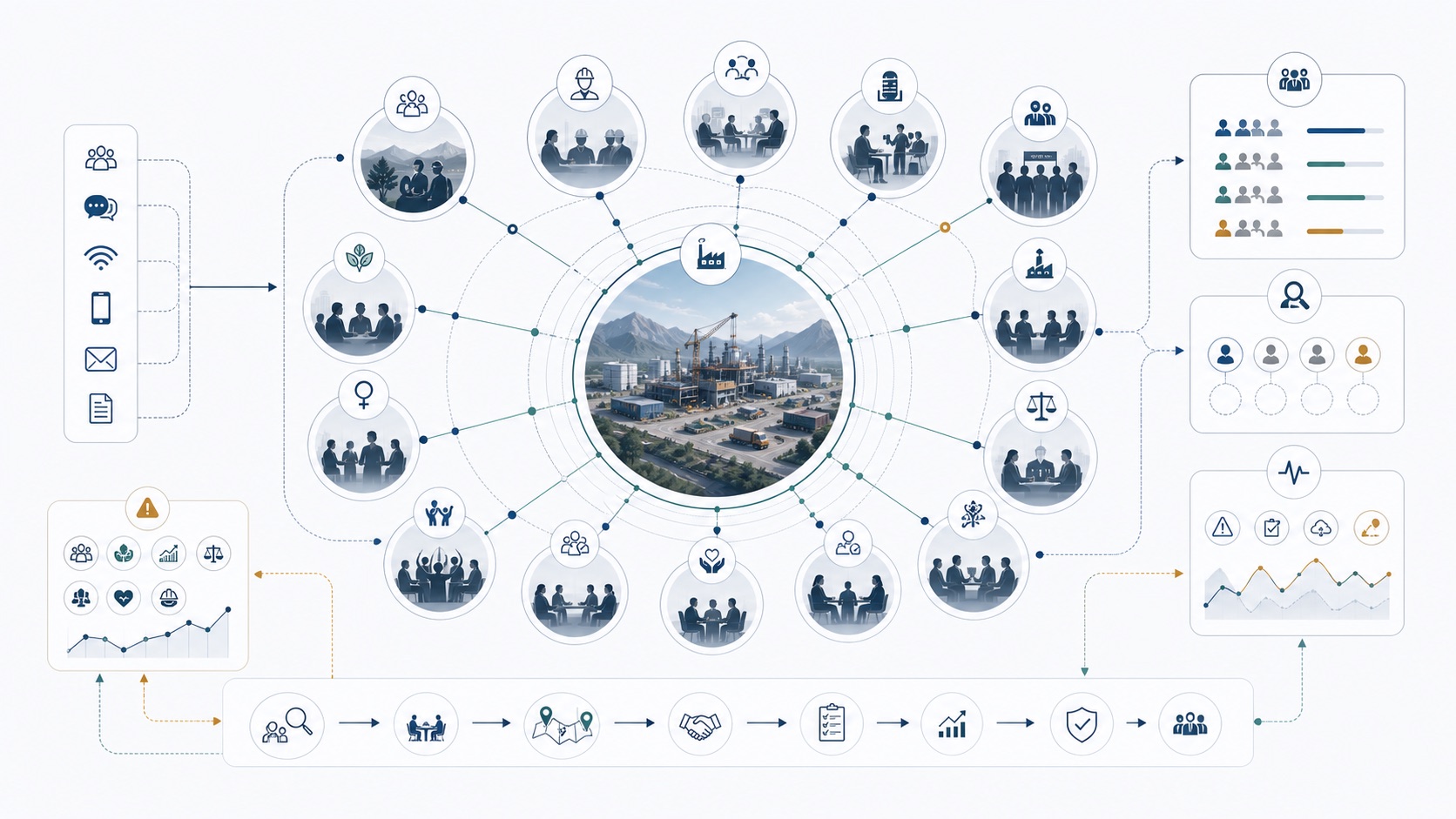
Identify organizations, networks, information channels, influence patterns, and representation gaps before issues escalate.
Translate community, worker, NGO, media, and union concerns into risk pathways, response plans, and commitment tracking.
Use remedy registers, worker feedback, community confirmation, and independent learning reports to move from dialogue to accountable action.
Our positioning
ESG Cooperation Hub is not an outsourced public-relations function. We do not promise to eliminate criticism or turn stakeholder participation into project endorsement.
Our role is to create structured engagement, surface risks, support dialogue, protect sensitive information, help design remedy pathways, and enable companies and partners to learn from verifiable evidence.
Approach
We recommend a phased approach that reduces trial-and-error and avoids premature exposure in sensitive contexts.
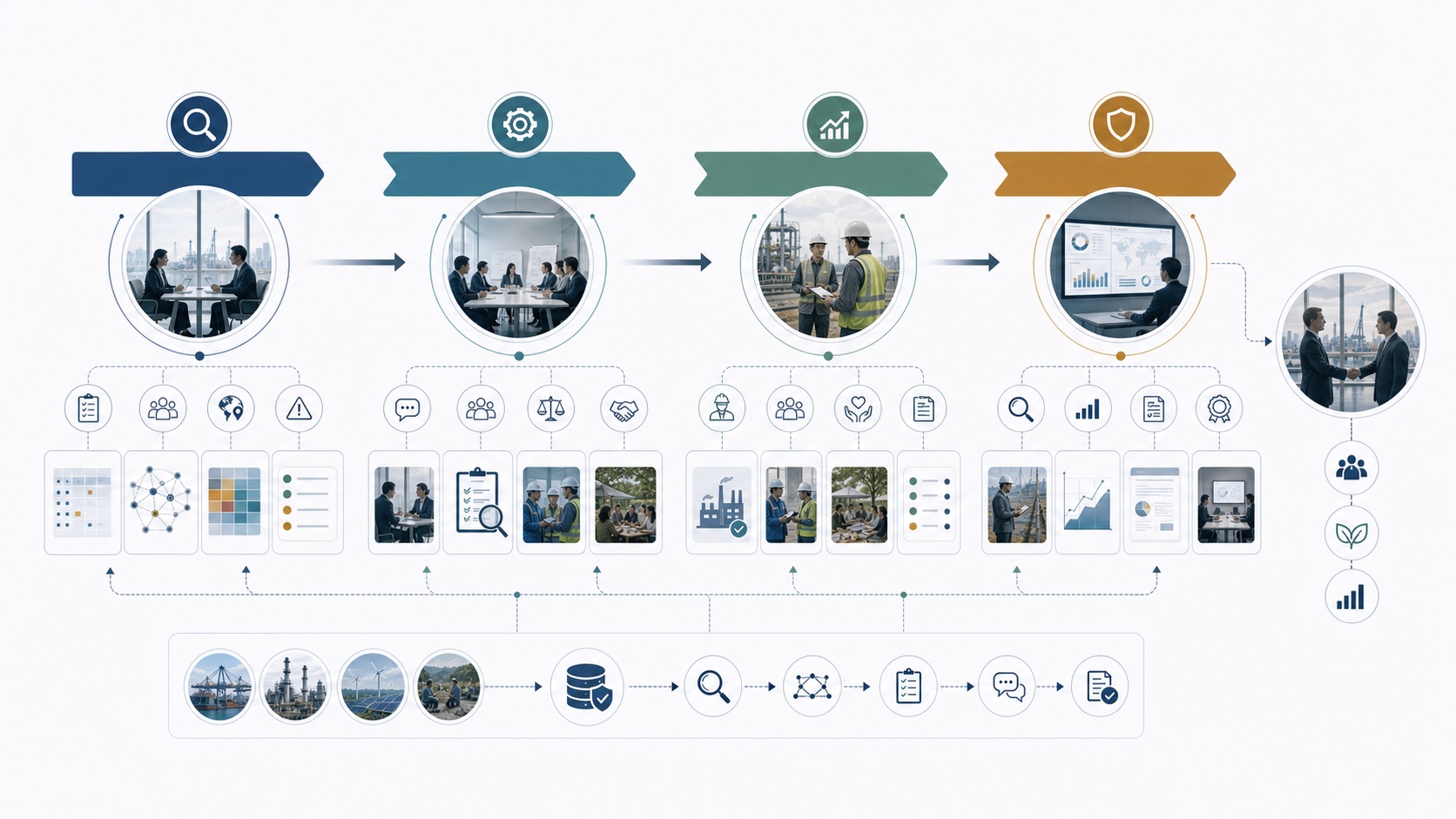
Start with a project–region entry assessment, stakeholder ecosystem map, and risk-issue pathway matrix. Projects at feasibility or ESIA scoping stage can begin with our Organizational Stakeholder Baseline.
Based on the diagnostic, select targeted modules such as closed-door dialogue, grievance and remedy diagnosis, worker-driven micro-change, community cooperation design, or commitment tracking.
Test one concrete issue first, such as worker grievance, contractor conduct, community health and safety, media fact-checking, or NGO dialogue, and verify whether the response works.
When the project enters construction, operation, remediation, or financing review, scale up with independent monitoring, learning reports, and handover plans.
Modules
Each module can be delivered independently or combined into a project-specific package.
A rapid review of project stage, country and regional context, available ESIA or HRDD materials, known complaints, media signals, labor risks, community sensitivities, and ethical entry conditions.
Mapping of community organizations, NGOs, media, unions, industry associations, faith-based groups, women’s and youth organizations, cooperatives, public-interest institutions, professional bodies, and local opinion networks.
A structured matrix linking project activities to stakeholder concerns, affected groups, information channels, evidence levels, potential escalation pathways, and recommended responses.
A practical plan for information disclosure, targeted consultations, worker communication, NGO and media engagement, vulnerable-group participation, and feedback loops.
Structured, confidential dialogue formats for sensitive issues involving companies, communities, unions, NGOs, media, industry actors, or other relevant stakeholders.
Review of whether existing grievance mechanisms are accessible, trusted, non-retaliatory, trackable, and capable of triggering meaningful remedy.
Small, practical, worker-informed improvements in areas such as grievance access, safety communication, dormitory conditions, wage transparency, training, contractor behavior, or worker feedback.
Design of community cooperation projects linked to actual impacts, local needs, local partners, implementation capacity, monitoring indicators, and exit arrangements.
A tracking tool for commitments arising from consultations, dialogues, grievances, media responses, worker-improvement pilots, community projects, and contractor corrective actions.
Periodic review of whether commitments, remedy measures, grievance handling, worker improvements, and community cooperation activities are implemented and verified.
A handover document that preserves continuity when ESG Cooperation Hub exits, ensuring unresolved issues, contacts, commitments, and monitoring needs remain visible.
Good fit
This service is designed for projects and partners facing one or more of the following situations:
Deliverables
Depending on project scope and risk level, the service may produce:
Public-facing and internal versions are separated. Public outputs emphasize transparency, method, and learning. Internal outputs preserve sensitive information needed for risk management, including organization-level details, worker complaints, remediation gaps, and early warning signals.
Safeguards
The service works only when engagement is linked to responsibility, evidence, and follow-up. ESG Cooperation Hub applies the following conditions:
We are not a public-relations proxy and do not provide endorsement services.
We prioritize local knowledge and collaborate with trusted local organizations, researchers, interpreters, unions, or community partners where appropriate.
Companies must designate internal owners who can connect stakeholder concerns with engineering, operations, HR, procurement, legal, communications, finance, and contractor management.
We distinguish public-facing materials from internal risk-management materials to protect sensitive information and people.
External commitments should be recorded, assigned, budgeted, monitored, and closed with evidence.
Remedy is not complete until it can be verified through appropriate evidence, such as worker feedback, community confirmation, records, photos, monitoring data, or independent review.
How to start
For most projects, we recommend starting with a focused diagnostic rather than a full engagement program.
Share your project stage, country or region, known issues, and expected engagement needs.
We help identify likely stakeholder groups, risk issues, available materials, and whether a light, standard, or enhanced diagnostic is appropriate.
If the diagnostic confirms the need, we design modules such as dialogue, remedy diagnosis, worker micro-change, community cooperation, or independent monitoring.
FAQ
No. The service is designed for risk governance, stakeholder engagement, remedy, and verifiable improvement. We do not promise positive coverage or stakeholder endorsement.
No. It complements ESIA, HRDD, ESG due diligence, and project management by strengthening stakeholder mapping, engagement design, grievance and remedy pathways, and follow-up.
Sensitive work can begin internally. For higher-trust engagement, we often recommend separating internal risk materials from public-facing method and learning materials.
Unstructured engagement can create risk. That is why we recommend diagnosis first, clear boundaries, local partners, information-use rules, and closed-door formats where appropriate.
Success means the project understands its stakeholder ecosystem, has a clear engagement plan, tracks commitments, verifies remedy, and can show how external concerns are converted into responsible action.