Beyond demographics
Identify formal and informal organizations, representation gaps, local knowledge, and groups that ordinary household surveys may not reach.
Specialist ESIA workstream
An evidence-led assessment of how local organizations, representation, trust, information flows, labour networks, public institutions, and historical issues shape environmental and social risk before a project enters construction or deeper engagement.
This service complements, and does not replace, statutory ESIA, environmental field studies, legal advice, or lender review.
Why this workstream
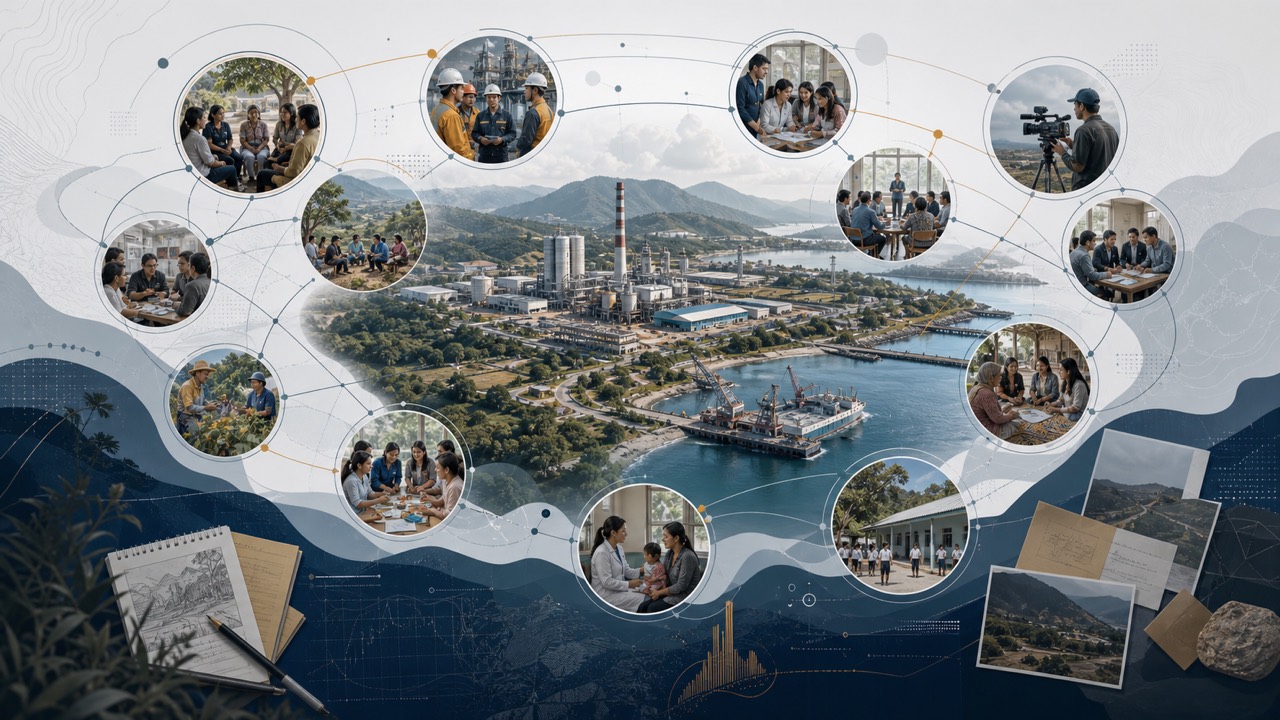
Population, land, income, infrastructure, and public-service data are essential. They are not enough to explain who is trusted, who represents whom, how concerns travel, or why a local issue may become a labour dispute, media controversy, lender concern, or prolonged conflict.
Identify formal and informal organizations, representation gaps, local knowledge, and groups that ordinary household surveys may not reach.
Distinguish administrative approval from social understanding, meaningful participation, and the project’s ability to manage concerns over time.
Assess each organization’s function, evidence, trust, influence, vulnerability, and capacity to amplify, mediate, monitor, or reshape risk.
The baseline
An organizational stakeholder baseline explains how the project area and connected external networks organize, communicate, negotiate, contest, provide services, and respond collectively to change.
Which formal and informal organizations, institutions, networks, and communication channels exist?
Who does each organization claim to represent, who participates, and who may be excluded?
How do organizations relate to communities, workers, government, business, media, finance, and one another?
Which environmental, social, labour, cultural, health, safety, and historical issues matter to each network?
Who can provide evidence, mobilize, mediate, deliver services, monitor impacts, or support remedy?
How may alliances, influence, concerns, and positions change across planning, construction, operation, and closure?
Risk pathways
Risk is shaped not only by the physical impact, but also by how it is detected, interpreted, communicated, and governed.
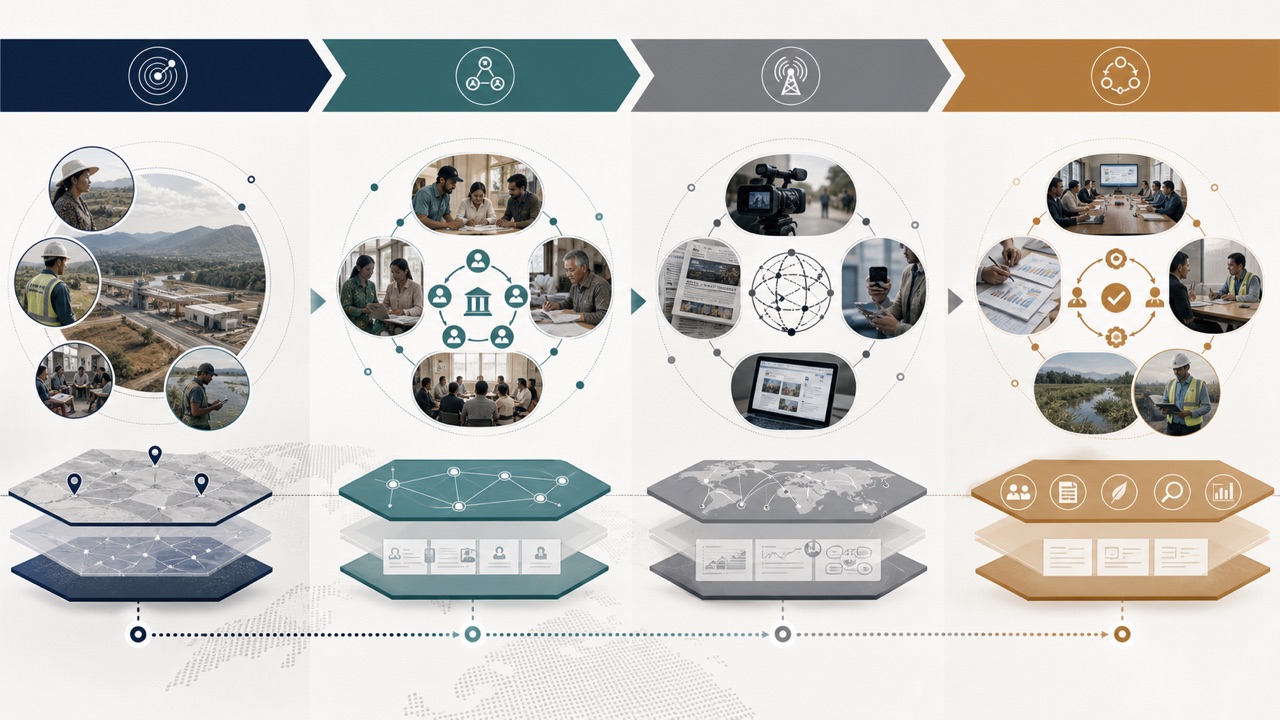
Communities, workers, service providers, and resource users detect changes in land, water, livelihoods, safety, employment, or public services.
NGOs, unions, professional bodies, faith groups, associations, and local leaders connect lived experience with rights, standards, and historical context.
Media, social platforms, legal channels, worker networks, public institutions, and international actors may verify, reframe, reduce, or amplify concern.
Evidence, engagement, mitigation, grievance handling, monitoring, and accountable follow-up determine whether the issue is resolved or escalates.
Stakeholder coverage
Coverage is adapted to the project’s footprint, area of influence, workforce model, supply chain, information environment, and risk profile.
Method
The work is proportionate to project risk and combines document review, field identification, confidential interviews, network analysis, issue assessment, and management planning.
Link project activities, associated facilities, contractors, labour influx, supply-chain interfaces, and regional information networks to the assessment scope.
Analyse prior ESIAs, HRDD materials, government and court records, media coverage, NGO reports, complaints, labour data, and local planning documents.
Use multiple entry points and snowball identification rather than relying only on project or government referral lists.
Assess membership, leadership, representation, legitimacy, trust, issues, relationships, capacity, vulnerability, and confidentiality needs.
Examine cooperation, conflict, information sharing, media links, labour relations, legal support, mediation capacity, and potential escalation routes.
Translate the baseline into engagement, grievance, labour, contractor, resettlement, livelihood, cultural-heritage, disclosure, and monitoring measures.
Assessment themes
The organizational lens is applied to the issues most likely to shape project design, implementation, and social risk.
Seasonal workers, labour influx, informal tenants, migration, housing pressure, and community-newcomer relations.
Customary, shared, seasonal, informal, gendered, cultural, and livelihood uses that formal records may omit.
Value chains, cooperatives, traders, transporters, tenants, informal workers, and indirect livelihood dependencies.
Capacity and access across health, education, housing, water, waste, transport, emergency response, and community care.
Sacred sites, burial grounds, cultural landscapes, traditional routes, ceremonies, and confidential knowledge.
Water and sanitation, communicable disease, mental stress, traffic, gender safety, child safety, and access to care.
Construction traffic, hazardous materials, worker camps, security conduct, emergency readiness, and occupational risks.
Women, youth, older people, persons with disabilities, minorities, informal workers, migrants, tenants, and unrecognized users.
Historical pollution, compensation disputes, labour conflict, ethnic or political tension, unmet commitments, and institutional mistrust.
Analytical framework
The framework keeps the assessment focused on what organizations do, where project blind spots arise, and how findings become usable management inputs.
5
4
3
Deliverables
Deliverables are selected according to project stage, sector, geography, sensitivity, and the requirements of the ESIA or due-diligence team.
Public-facing and internal versions are separated where needed. Internal annexes may contain sensitive organization-level, worker, community, cultural, media-source, or early-warning information and are handled under agreed access and use rules.
Management integration
A baseline that remains descriptive has limited value. Findings should be assigned to the relevant project systems, owners, budgets, contractors, and monitoring arrangements.
Strengthen social context, impact pathways, rights-holder analysis, alternatives, mitigation, and adaptive risk review.
Set stakeholder categories, channels, timing, language, consultation format, and measures for groups excluded from public meetings.
Design trusted community and worker entry points, referral pathways, confidentiality, non-retaliation, escalation, and closure evidence.
Inform LMP, ESMP/C-ESMP, RAP/LRP, cultural-heritage plans, contractor requirements, traffic and community-safety plans, and monitoring.
Good fit
The workstream is most valuable before major commitments are locked in, but it can also repair a weak or outdated baseline.
Safeguards
Organizational research is sensitive. It must not become opposition mapping, surveillance, selective engagement, or a route to project endorsement.
Participants are told the purpose, intended use, confidentiality arrangements, and limits of the assessment.
Evidence, stakeholder views, risk signals, and professional judgment are distinguished. Participation is not presented as support.
Workers, complainants, community members, NGOs, media sources, and vulnerable groups require safe participation and protected identities.
No single leader or organization is assumed to speak for an entire community, workforce, identity group, or issue.
Cultural sites, worker testimony, personal data, security concerns, and internal early-warning material are access-controlled.
The service does not guarantee social licence, eliminate criticism, certify compliance, or replace legal and technical specialists.
Scope options
For early market entry, opportunity review, site comparison, or ESIA scoping. Focuses on available evidence, major networks, critical gaps, and ethical entry conditions.
Combines structured desktop research, field identification, interviews, organization profiles, network and issue analysis, and management recommendations.
For complex land, labour, Indigenous Peoples, cultural heritage, conflict, legacy, or lender-risk contexts, with specialist and independent local support.
How to start
We first clarify what decisions the baseline must support and whether a rapid, standard, or enhanced scope is appropriate.
Provide the country or region, sector, project stage, footprint, workforce model, available ESIA materials, and known concerns.
Identify whether the work must inform site selection, due diligence, ESIA, financing, construction readiness, or baseline repair.
Confirm methods, local expertise, access, languages, sensitive-information rules, outputs, and links to the wider project team.
FAQ
No. It is a specialist social and stakeholder workstream that strengthens ESIA, HRDD, project preparation, and lender due diligence. Environmental sampling and specialist technical studies remain separate.
No. The purpose is to understand environmental and social risk, representation, information flows, participation needs, and management capacity. It is not designed to identify opponents, control narratives, or obtain endorsement.
Yes. Early work can inform site selection, alternatives, terms of reference, field planning, local partnerships, budgets, and the design of later engagement.
Yes. We can separate public method and summary materials from controlled internal annexes. Confidentiality does not remove the need for appropriate disclosure, consultation, or remedy.
No. Social acceptance is dynamic and cannot be guaranteed. Success means the project understands the local social system, identifies material gaps, makes better decisions, and can respond to concerns with evidence and accountability.
The findings can move into a Project–Region Multi-Stakeholder Engagement program covering dialogue, grievance diagnosis, pilot improvements, commitment tracking, and independent monitoring.